/ Akihiro Hasegawa

Venue
(06)KURA HOUSE
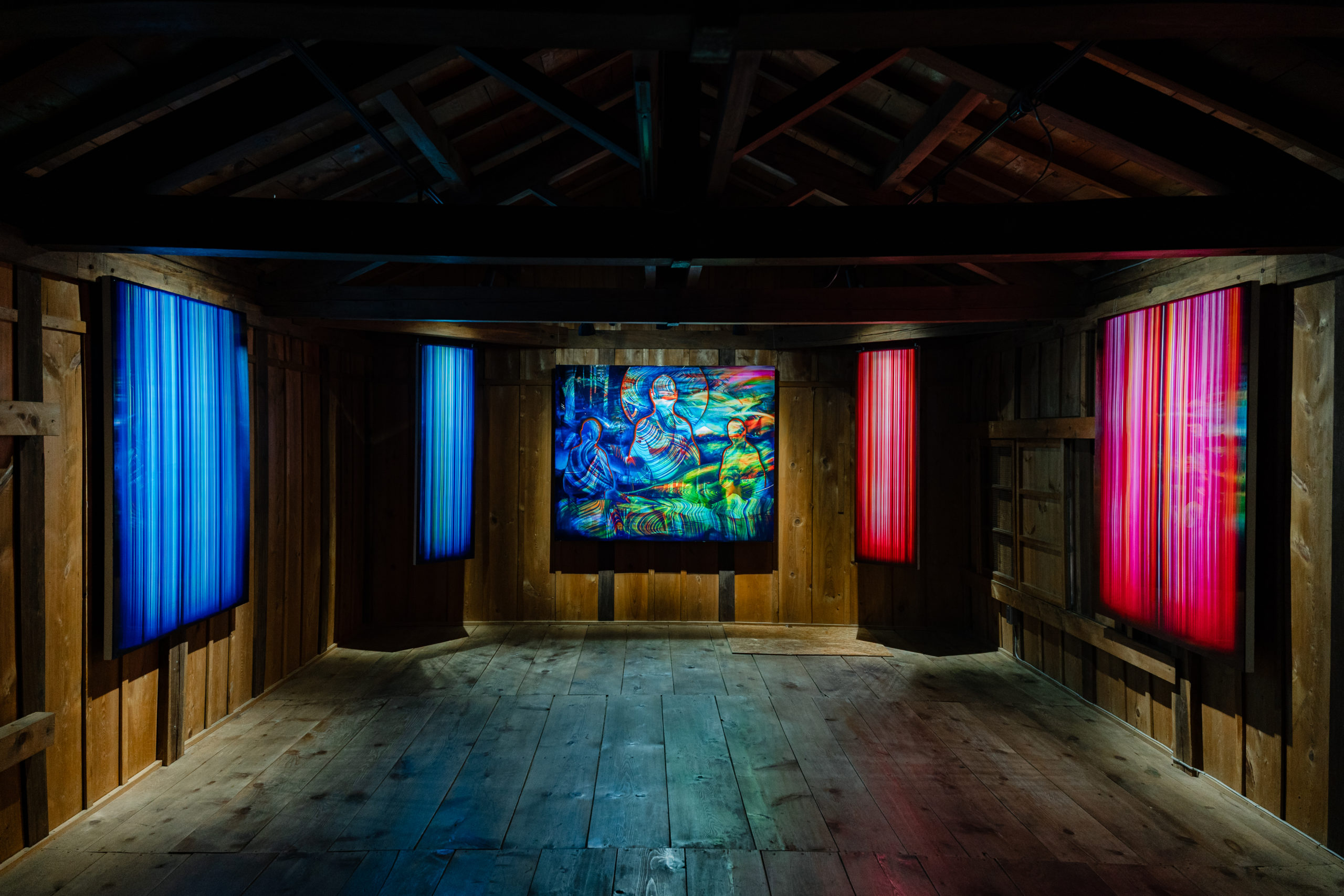
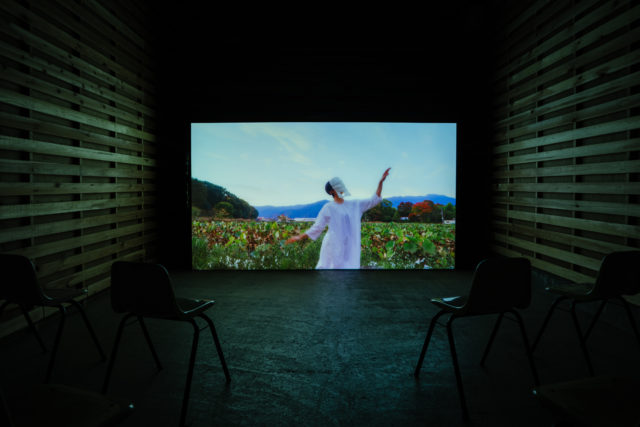
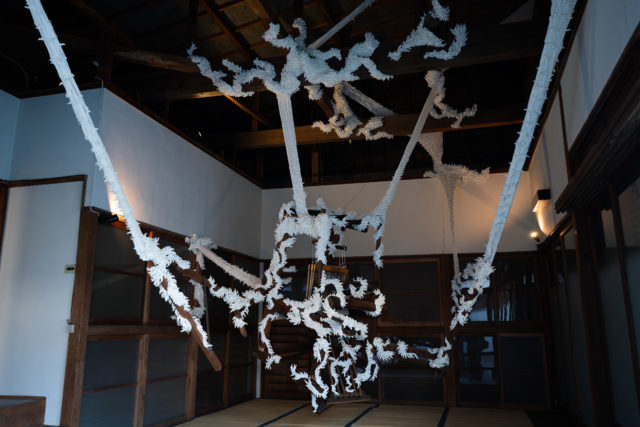
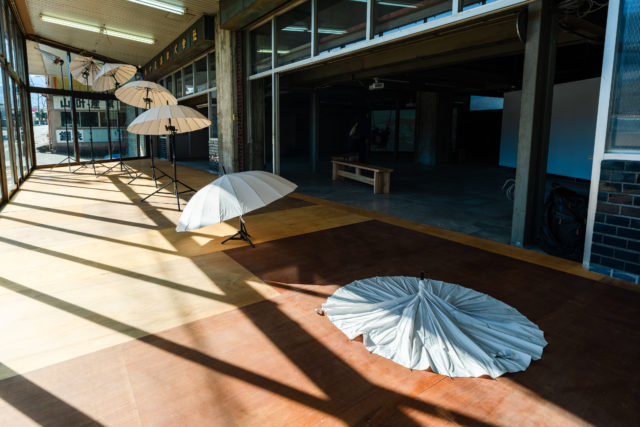
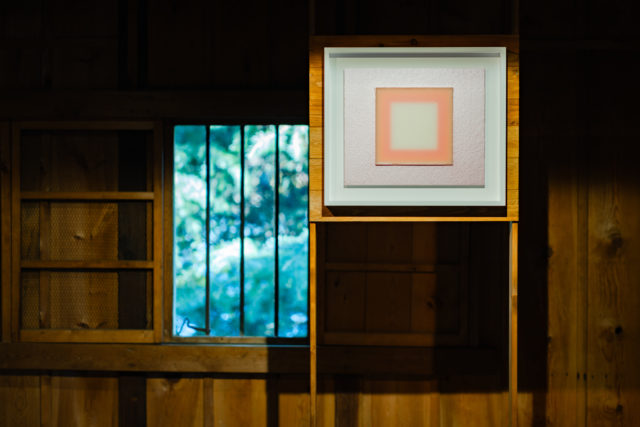
《Confession, Advent, Light. Or the Horizon.》2025
About Works
[Curatorial Comment]

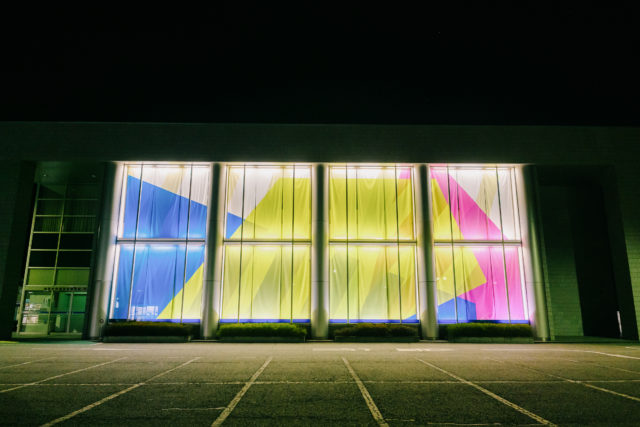
At the center of the exhibition space stand three silhouettes that evoke the Buddhist concept of sanjin soku itsu(the unity of the Three Bodies of the Buddha), arranged so that they seem to rise from within layered fields of light. The tall vertical panels flanking them recall the opening of a portable shrine (zushi), and can be read variously as bundles of woven threads or as upward-moving currents of light. The venue itself requires visitors to climb a steep, narrow staircase to the third floor—a route Hasegawa likens to ascending a Fuji mound (Fujizuka), anticipating a viewing experience akin to greeting the sunrise at a summit.
During the production process, Hasegawa found himself returning to the “Brocken spectre,” a phenomenon in which one’s shadow is encircled by a rainbow-like halo when light shines from behind in a mist-filled mountain environment—an occurrence once interpreted as the descent of Amida Buddha. Even now, with its optical mechanism well understood, its luminous apparition retains its spiritual force. The exhibition space is conceived as a site in which this phenomenon can be traced—an “arena of appearance” that parallels the moment it emerges when one turns back unexpectedly on Mount Fuji’s summit.
Fujiyoshida has long been a site of worship, and Mount Fuji itself has been regarded as a place where Amida Buddha resides at the peak. For this exhibition, the seventy-year-old storehouse is treated as a kind of sanctuary, its accumulated strata of time reorganized through light and shadow. As viewers move through the space, following the operation of light and the structure of the panels, they encounter the layers of Buddhist thought, local history, and the temporal depth of the site as it reveals itself between illumination and obscurity.
Hasegawa was born into a temple of the Tendai Buddhist lineage, ordained in 2009, and completed the fourfold ascetic practices (yondo kegyō) at Saikyōji Temple of the Tendai Shinsei school in 2019. His background as a buddhist monk informs the persistent presence of “light” within his work, providing a grounded basis for the spiritual and philosophical perspectives that shape his practice.
Artist Profile
長谷川 彰宏 / Akihiro Hasegawa
©Akihiro Hasegawa

長谷川 彰宏 / Akihiro Hasegawa

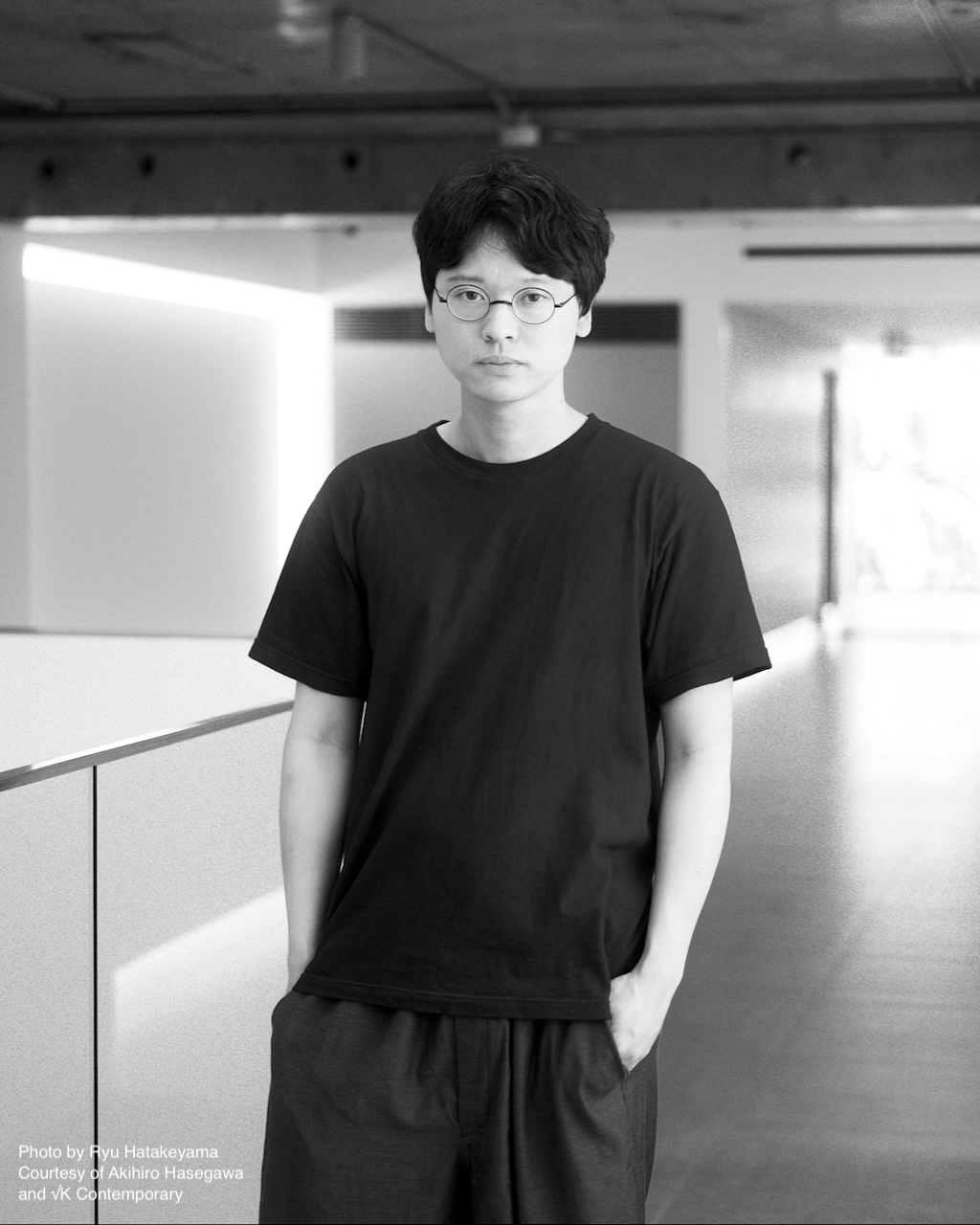
Born in Mie in 1997 and based in Tokyo. A successor to a family-run temple, Hasegawa entered the Buddhist priesthood at Saikyo Temple, Mt. Hiei at 10 years old. By 19 years old, he enrolled in the Tokyo University of the Arts, the most prestigious art school in Japan, which, considering its notoriously low acceptance rate, is a rare and striking accomplishment. In 2019, he completed the Buddhist Shidokegyo (Four Preliminary Practices) and, in the following year, began his master’s degree at the Tokyo University of the Arts. His works mainly depict human figures. Eclectic and elaborate, they traverse a range of styles, from Byzantinesque oil pastel drawings to realistic portraits and experimental multilayered acrylic plate paintings. Overarching themes of his works include Buddhist imagery, ideas regarding the existence and potential of space and time in painting, and an inherent curiosity and affinity for human subjects. Hasegawa is an ALT Project creative director and a recipient of the distinguished Kuma Foundation grant.