/ Fuka Nagata

Venue
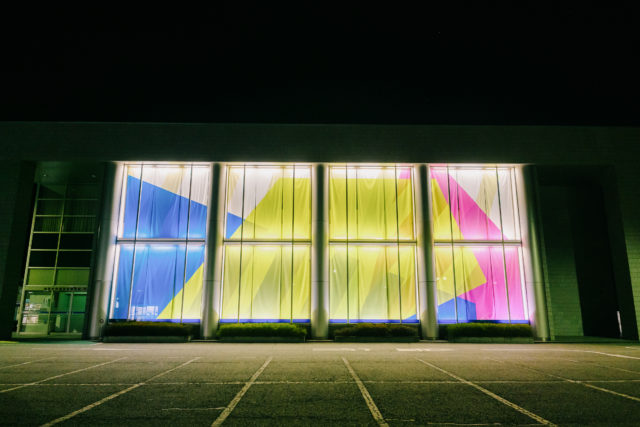
(15)FUJIHIMURO
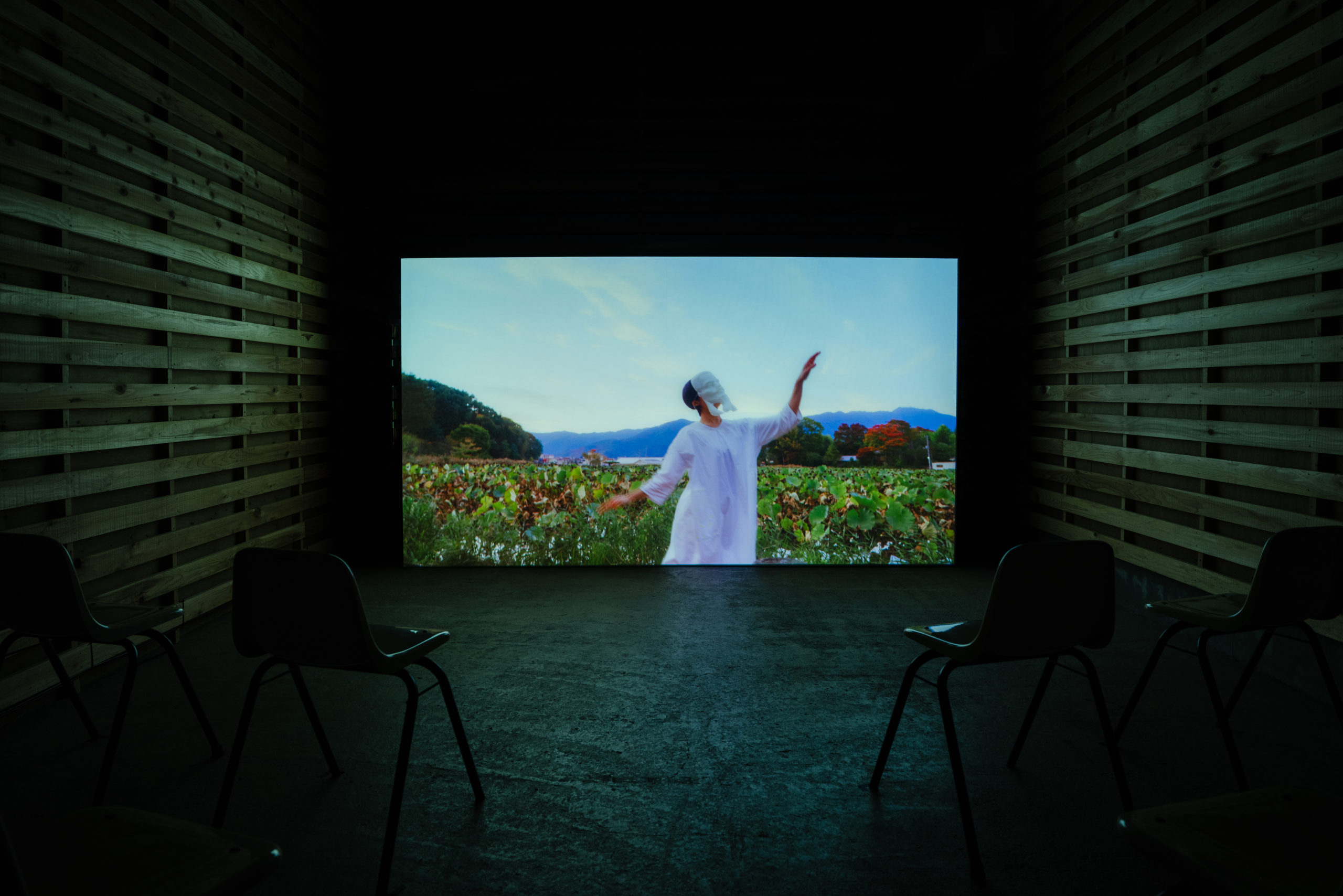
《Xu Fu – Crane and Fire 》2025
About Works
[Curatorial Comment]

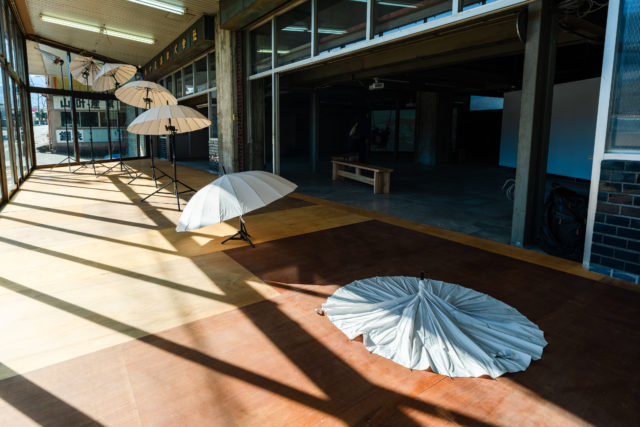
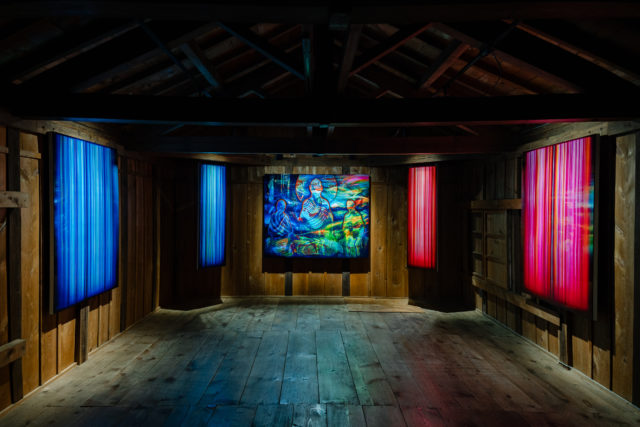
This work is a video piece inspired by the Jofuku legend preserved in Fujiyoshida, reconfiguring local forms of masked performance into a contemporary kagura (a ritual dance tradition rooted in Shinto practices) structured through dance and masks. The video begins with a poem written for this work by artist and poet Natsumi Aoyagi, after which a female dancer dressed in white appears, successively donning the Jofuku mask, the silkworm mask, and a woman’s mask while performing in various sites across the city, including a textile factory and a lotus pond. Guided by Nagata’s sound work—composed of loom noises and environmental recordings—the dancer’s body traces the memory of the land, drawing into the present the intangible presence of Jofuku.
In local lore, Jofuku is remembered as a historical figure who introduced sericulture and weaving techniques. When viewed alongside Jofuku legends found across Japan, however, he also emerges as a symbol for technologies and cultural practices brought from abroad. The figures who appear wearing the silkworm mask and the woman’s mask—referring respectively to the silkworm, domesticated and bred to depend on humans, and to the female laborers who sustained the textile industry—gesture toward the bodies that have supported such technological developments from behind the scenes.
This region also preserves the story of Jofuku transforming into a crane after death, and in front of the exhibition venue coincidentally stands Fukugenji Temple, which maintains a mound believed to mark the spot where the crane-form Jofuku descended. These local narratives, together with the history of textile production in which “things arriving from elsewhere take on new forms and are carried forward,” form the background of the work. Constructed through the interplay of movement and sound, the kagura in this piece functions as a device through which viewers encounter and decode the multiple layers of memory that reside within Fujiyoshida, within the present moment.

[Artist Statement]

During the reign of the First Emperor of China, the court sorcerer Jofuku (徐福) was said to have sailed east in search of the elixir of immortality, believed to exist on Mount Hōrai at the far edge of the eastern sea. The mountain he sought was said to be Mount Fuji itself. Jofuku searched far and wide but never found the elixir. Unable to return home, he married a local woman and settled in what is now Fujiyoshida, where he taught the villagers the techniques of weaving and sericulture. Legend says that this began the region’s long textile tradition.
Across Japan, legends tell of Jofuku as a bringer of knowledge who introduced agriculture, fishing, whaling, papermaking, sericulture, and weaving. Many of the places where he is said to have lived contain the word Hata or Hada in their names, and his descendants are thought to have been known as the Hata people. In legends of Tsuru City, Yamanashi Prefecture, Jofuku later transformed into a crane (tsuru), giving rise to the city’s name. In Fujiyoshida, Fukugenji Temple, coincidentally located directly across from the exhibition site, preserves the Tsuruzuka mound, which likewise commemorates the legend of Jofuku’s transformation into a crane.
For FUJI TEXTILE WEEK, under this year’s theme “What Flows Beneath the Weave,” this legend serves as the point of departure for an imagined kagura performance exploring the migration and transformation of textile culture across time and place.
Artist Profile
永田 風薫 / Fuka Nagata

永田 風薫 / Fuka Nagata

Born in 1998 in Hamamatsu, Shizuoka Prefecture, Japan. Graduated in 2021 from the Department of Musical Creativity and Environmental Design, Faculty of Music, Tokyo University of the Arts. Completed a master’s degree in 2024 from the Graduate School of Film and New Media, Department of New Media, Tokyo University of the Arts. Through sound-based works rooted in urban environments and electric guitar performance, they explore the social and political dimensions of sound. Their practice also involves recording people and places through photography and audio, focusing on how playback transforms these subjects.
Major presentations include:
Disaster Broadcast Communication – An Opera for Horn Speakers and Sirens (Hoku Topia, Tokyo, 2024)
The Home Economics – A Soundtrack for Rooms, Voices, and Actions (Kamo e Art Center, Shizuoka, 2025)